The landscape of digital discovery is undergoing a profound transformation.
For years, the click served as the benchmark for SEO success. The measure of success was the number of users who navigated from the Google results page to your website.
However, a new reality has set in where a significant portion of searches now end without a single click. This shift has sparked conversations about whether traditional search optimization is losing its value.
What Zero-Click Search Actually Means
The core question is no longer just how to get people to your site, but how to ensure your brand is the one providing the solution, regardless of where that answer is consumed.
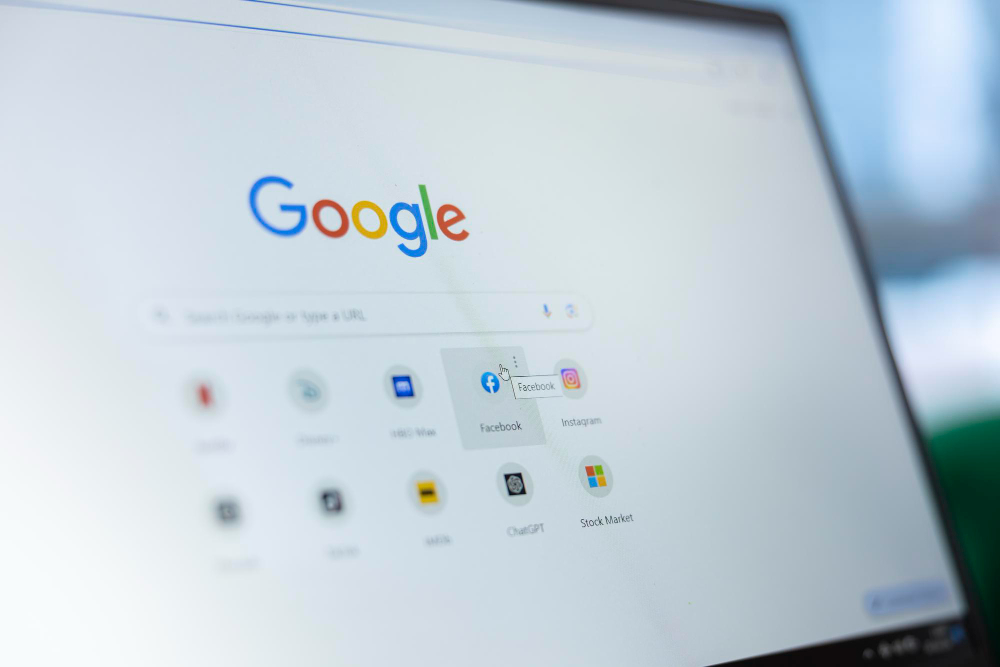
Zero-click search occurs when a user’s query is answered directly on the Google results page. Instead of clicking a blue link, the user finds what they need through featured snippets, knowledge panels, local packs, or AI-generated summaries. These elements are designed to deliver immediate gratification by pulling the most relevant data points from the web and presenting them upfront.
While it is true that these results keep the user on Google, visibility has not vanished. It has simply changed its form. A zero-click result is a premium placement where Google has effectively “hand-picked” your content to serve as the definitive answer. Even if a session doesn’t result in a traditional click, your brand is still the one building authority and solving the user’s problem at the very top of the page.
Why Google Prioritizes Direct Answers
Google’s primary objective has always been to provide the best possible user experience. In a mobile-first world, speed and convenience are the highest priorities. If a user wants to know the time in another city or a simple legal definition, forcing them to click a link and wait for a page to load is a friction point Google wants to remove.
By retaining users within its own ecosystem, Google ensures a faster, more cohesive journey. This evolution is driven by sophisticated AI models that interpret structured information with incredible accuracy.
These models look for clear, authoritative signals to synthesize into direct answers. This isn’t a threat to businesses; it is an inevitable evolution of how technology meets human demand for efficiency.
The Real Impact on Businesses
The impact of zero-click search is layered and varies depending on the type of query. Informational queries are the most heavily affected.
High-level, educational searches that require a simple fact or definition are now largely handled within the search interface. This means that if your content only provides surface-level facts, your click-through rate will likely decline.
However, there is a powerful effect on brand authority. Appearing in a featured snippet or an AI summary provides a massive credibility boost.
Even without the click, the user sees your brand name associated with the “correct” answer. Furthermore, while clicks might decrease for certain keywords, your total impressions may rise significantly.
Traffic is no longer the only metric of influence; being the source of truth is a powerful marketing asset that builds long-term trust.
When Zero-Click Search Is a Threat
The rise of direct answers is only a threat to businesses that lack a modern strategy. Sites that rely purely on high-volume, “thin” informational content are at risk because they provide nothing that Google cannot easily summarize.
If your website exists solely to answer questions that can be settled in a single sentence, you are competing directly with Google’s own interface.
The real danger lies in having a “leaky” conversion funnel.
- Businesses that fail to create conversion-focused landing pages will find themselves invisible.
- Brands lacking strong authority signals struggle to compete with more established voices that Google prioritizes for summaries.
The risk is not in the zero-click behavior itself, but in a failure to provide the depth and specialized insights that an AI summary cannot replicate.
How to Adapt Your Content Strategy
To thrive in this environment, businesses must execute specific strategic pivots. First, you must optimize for structured answers. This means using clear headings, providing direct definitions within your text, and crafting concise opening paragraphs that are easy for Google to scrape.
You want to make it as easy as possible for the algorithm to choose you as the featured answer.
Second, you must build depth beyond the snippet. If Google provides the “what,” your website must provide the “how” and the “why.”
Your content should go further than surface-level answers by offering deep analysis, real-world examples, and proprietary frameworks that require a full read to appreciate.
Third, strengthen your brand authority through transparency.
Providing original insights creates a reason for the user to click even after they have seen the summary.
- Use robust author bios and detailed case studies to prove expertise.
- Leverage original data points and proprietary research that cannot be found elsewhere.
Finally, prioritize your conversion architecture. Ensure that high-intent pages are easily accessible and that your informational content naturally guides the user toward a service page or a contact form.
When a user does decide to click, the transition from information to action should be seamless.
The Relationship Between Zero Click and AI Search
The introduction of generative search experiences has amplified zero-click behavior.
AI summaries can now synthesize multiple sources into a single, cohesive paragraph. This makes it more important than ever to establish topical authority.
To remain relevant, your content must be part of a structured ecosystem where every piece of information reinforces your expertise.
Long-term SEO resilience comes from being the most trusted source in a specific niche, which ensures AI models continue to reference your data.
Measuring Success in a Zero-Click Environment
Measuring success now requires a shift from clicks only to a blended set of metrics. Businesses must evaluate their total impressions and brand name queries to understand their reach.
If your “unbranded” traffic is down but your “branded” searches are up, it is a sign that your zero-click visibility is building real-world awareness.
Focus on revenue attribution and assisted conversions rather than vanity traffic numbers. Reporting expectations must be adjusted to value the influence of a brand being seen at the top of the page.
Strategic Conclusion
Zero-click search is not a sign of extinction for digital marketing; it is a sign of its maturity. Authority and clarity now outperform sheer volume.
The businesses that gain a competitive advantage are those that embrace this evolution by providing structured, high-quality content that Google loves to feature and users find indispensable.
By adapting your strategy to meet modern search behavior, you ensure your brand remains at the center of the movement.
Contact Create The Movement today and strengthen your content strategy for modern search visibility.
📞 (918) 770-0211