Single-channel dependency is one of the most common and most expensive risks in digital marketing.
A business that relies entirely on Facebook ads for lead generation is one algorithm update away from a revenue crisis. A business built on organic search alone is vulnerable the moment Google shifts its ranking priorities. A business dependent on referrals has no control over its growth.
These are not hypothetical risks. They are patterns that repeat across industries, and the businesses that recover fastest from them are almost always the ones that had already built an integrated marketing strategy before the disruption hit.
Integration is not about doing everything at once. It is about building a system where each channel supports and amplifies the others, creating compounding results that no single channel can produce alone.
SEO as Long-Term Visibility Infrastructure
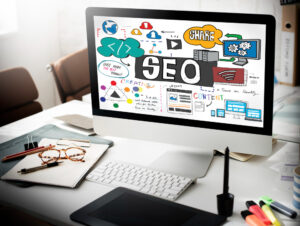
SEO is the foundation layer of an integrated marketing strategy.
It does not produce immediate results. It produces durable ones. Every page that earns a strong organic ranking is a long-term traffic asset that generates qualified visitors without ongoing spending. That compounding effect is what makes SEO so valuable as a foundational channel.
Beyond its traffic contribution, SEO directly supports paid media. When a business ranks organically for terms it is also bidding on, it builds credibility signals that improve ad performance. When content developed for SEO is used to educate retargeting audiences, it shortens the sales cycle by providing valuable information that addresses potential customers’ questions and concerns, ultimately leading to quicker purchasing decisions. Organic authority reinforces paid trust. The two channels are not competing. They are multiplying.
Paid Media as an Acceleration Layer
Where SEO builds long-term momentum, paid media produces immediate traction.
Paid campaigns can put a specific offer in front of a precisely defined audience within hours of launch. That speed is valuable not only for revenue generation but also for intelligence gathering. The data produced by paid campaigns—which headlines resonate, which audiences priorities, which can lead to a significant drop in website traffic and potential loss of customers.convert, and which offers produce the lowest cost per acquisition—directly informs organic content strategy and SEO priorities.
In an integrated marketing strategy, paid media is not a replacement for organic growth. It is an accelerant that generates results while organic authority builds and a testing ground that makes every other channel more effective over time.
Content Marketing as an Authority Engine
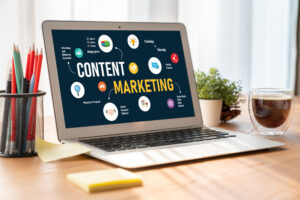
Content is the connective tissue of an integrated marketing strategy.
It feeds SEO with the topical depth and keyword relevance that produces rankings. It provides paid campaigns with educational assets that reduce friction and warm up cold audiences. It nurtures prospects through the funnel with material that addresses objections, demonstrates expertise, and builds the trust required for conversion.
A business with a strong content library is not just producing articles. It is building an authority infrastructure that supports every other channel simultaneously. Blog posts become retargeting ad content. Case studies become landing page proof. Educational guides become lead magnets. The content investment multiplies across the entire marketing system.
Retargeting and Audience Reinforcement
Most prospects do not convert on the first touchpoint.
They need multiple exposures across different contexts before they reach sufficient confidence to act. This is where cross-channel reinforcement becomes a significant competitive advantage. A prospect who finds your business through an organic search result, later sees a retargeting ad featuring a relevant case study, and then receives a nurture email addressing their specific objection is experiencing a coordinated, trust-building sequence.
Each touchpoint builds on the last. By the time that prospect reaches a conversion decision, they feel like they already know you. That familiarity reduces friction and increases close rates in ways that any single channel used in isolation simply cannot replicate, as it creates a more cohesive and trustworthy relationship between the prospect and the brand.
Measurement and Attribution Across Channels
Single-channel reporting produces a distorted picture of marketing performance.
Measuring each channel separately obscures the overall system’s contribution. A prospect who clicked an organic result, engaged with a retargeting ad, and then converted through an email link will be attributed differently depending on which model is being used. Last-click attribution gives all the credit to email. First-click gives it all to SEO. Neither approach provides a comprehensive view.
An integrated marketing strategy requires blended metrics and a revenue attribution model that reflects the actual path to conversion. This means tracking assisted conversions, not just last-touch ones. It means evaluating how channels interact rather than how they perform in isolation. And it means making investment decisions based on the contribution of the full system, not the surface performance of individual channels.
Integration Builds Resilience and Scalable Growth
The businesses that grow most consistently are not the ones with the best single channel. They are the ones with the most coherent system.
When SEO (search engine optimization), paid media, content, and retargeting are working together around a clear positioning and a shared conversion goal, the whole performs better than the sum of its parts. Traffic compounds. Trust builds faster. Conversion rates improve. And the business becomes significantly less vulnerable to the disruptions that regularly devastate single-channel operations.
An integrated marketing strategy is not more complicated than a single-channel approach. It is more stable, more scalable, and more profitable over time.
If your current marketing is built around one channel, the question is not whether to diversify. It is how quickly you can build the system that makes every channel more effective, such as by implementing tools for data analysis and customer engagement that enhance overall marketing performance.
Contact Create The Movement today at (918) 770-0211, and let us design an integrated marketing strategy focused on qualified leads and measurable growth.